
I Can’t Draw: How to Start Making Art and Find Your Style
A note for the creatively curious: Studio Notes is my twice-monthly newsletter about art, experimentation, and learning to see yourself as creative. Subscribe for fresh ideas, behind-the-scenes stories, and small invitations to try something new. Learn more here!
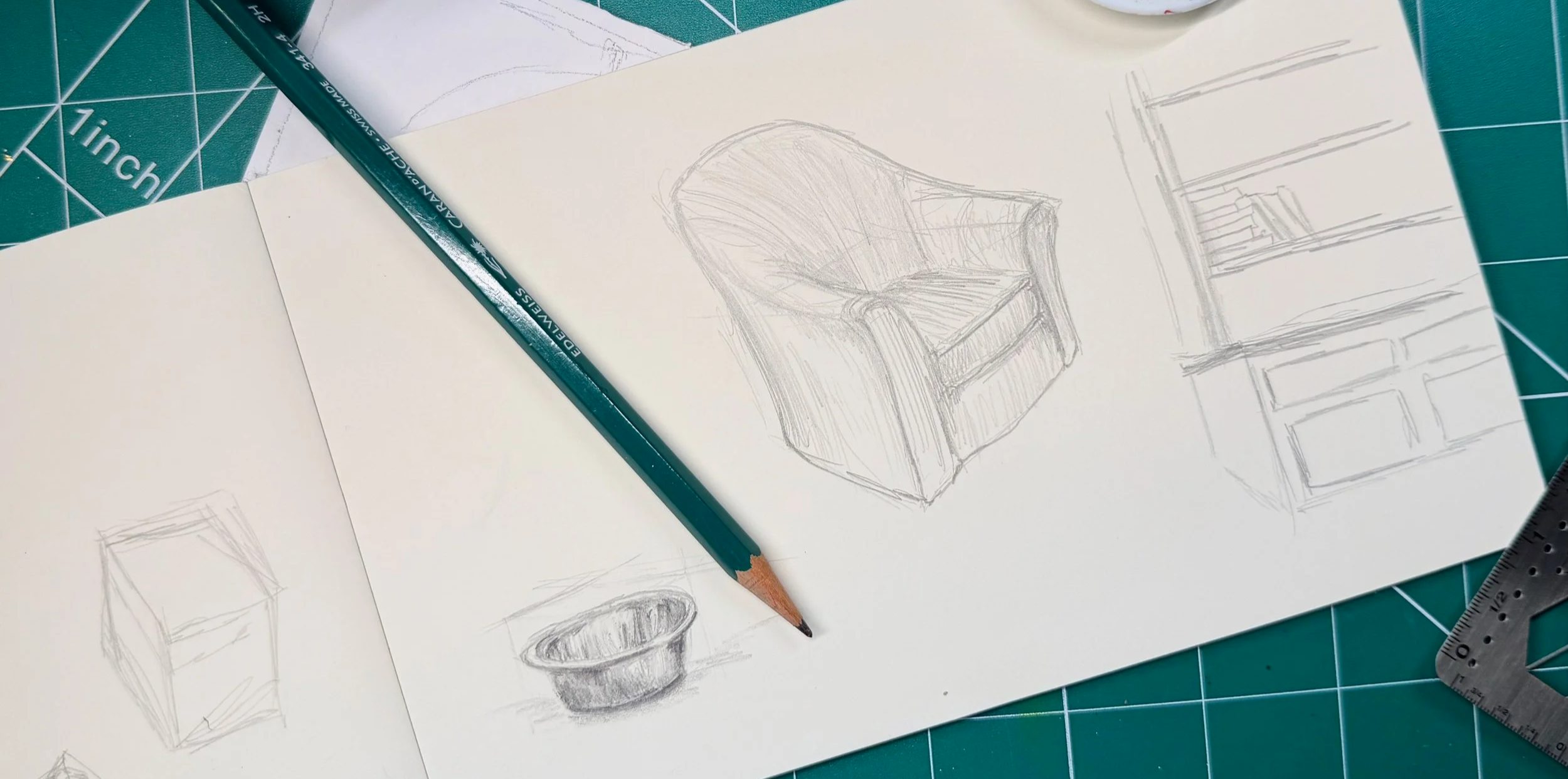
I hear people say this all the time: “I would love to make art, but I can’t draw.” And every time, I want to drag that sentence under a bright desk lamp and make it explain itself.
What do you mean you can’t draw? Can you make a line? A circle? A wobbly square? A weird little triangle with emotional baggage?
Congratulations. You can draw.
Now, can you draw a photorealistic elephant with perfect proportions, elegant shading, and a deep reverence for elephant anatomy? Maybe not. Most people can’t. But that doesn’t mean you can’t draw. It means you have mistaken one very specific skillset for all the artistry skillsets in the world.
Drawing Does Not Have to Behave
When most people say, “I can’t draw,” what they’re really saying is, “My drawing doesn’t look the way I think it’s supposed to.”
Imagine I asked you to draw an elephant. You sit down. You try your best. Maybe the legs are weird. Maybe the ears are giving confused pancakes. Maybe the trunk looks more like a garden hose having a personal crisis. Then we put your drawing next to a detailed photograph of an elephant. You might immediately say, “See? I told you. I can’t draw.”
But that’s not proof you can’t draw. That’s proof you expected your drawing to behave like a photograph.
And your drawing does not have to behave.
A drawing can be realistic, yes. But it can also be loose, symbolic, strange, crooked, graphic, tender, cartoonish, dramatic, devotional, ugly-on-purpose, or so simple it looks like it escaped from the margins of a notebook. Some drawings are trying to capture exactly what something looks like. Other drawings are trying to capture what something feels like.
Some drawings are maps.
Some are memories.
Some are jokes.
Some are prayers.
Some are little acts of defiance in pencil.
The problem is not that you can’t draw. The problem is that somewhere along the way, somebody convinced you drawing only counts if it looks “right.”
And I am not interested in obedient art.
Drawing Is Translation
Drawing is not just duplication. It is translation. When you write, you make marks we’ve all agreed mean something. Letters become words. Words become meaning.
Drawing is also mark-making. Lines, shapes, dots, scratches, smudges, pressure, rhythm. You are taking something you see, feel, remember, imagine, or wonder about and translating it through your hand.
A child drawing a house with a triangle roof and smoke curling out of the chimney is not making a technically accurate architectural rendering. But we still understand it.
A cartoon face with two dots for eyes and one line for a mouth can somehow communicate disappointment, joy, suspicion, exhaustion, or the specific feeling of opening your fridge and realizing the leftovers are gone.
So when you say, “I can’t draw,” it may be more accurate to say, “I haven’t learned the visual language I’m trying to use yet.” That is different. That gives you somewhere to go.
Style Is Not a Costume
There are tons of different styles out there. Photorealism. Folk art. Children’s book illustration. Comics. Botanical drawing. Abstract work. Graphic line art. The list goes on. If you want to learn a specific style, there are skills you can build to get there: observation, proportion, value, shading, anatomy, perspective. Those are learnable.
But I also think there is something powerful about figuring out your own visual language. Finding your style is about developing the audacity to trust your own marks.
Your style starts showing up when you stop trying to draw like the imaginary art judge in your head and start paying attention to what your hand naturally wants to do.
The lines you repeat.
The shapes you distort.
The details you obsess over.
The things you leave out.
The colors you keep reaching for.
The materials that make your brain light up.
Style is a pattern of choices. And often, those choices start showing up before you fully understand them.
How Style Gives You a Way In
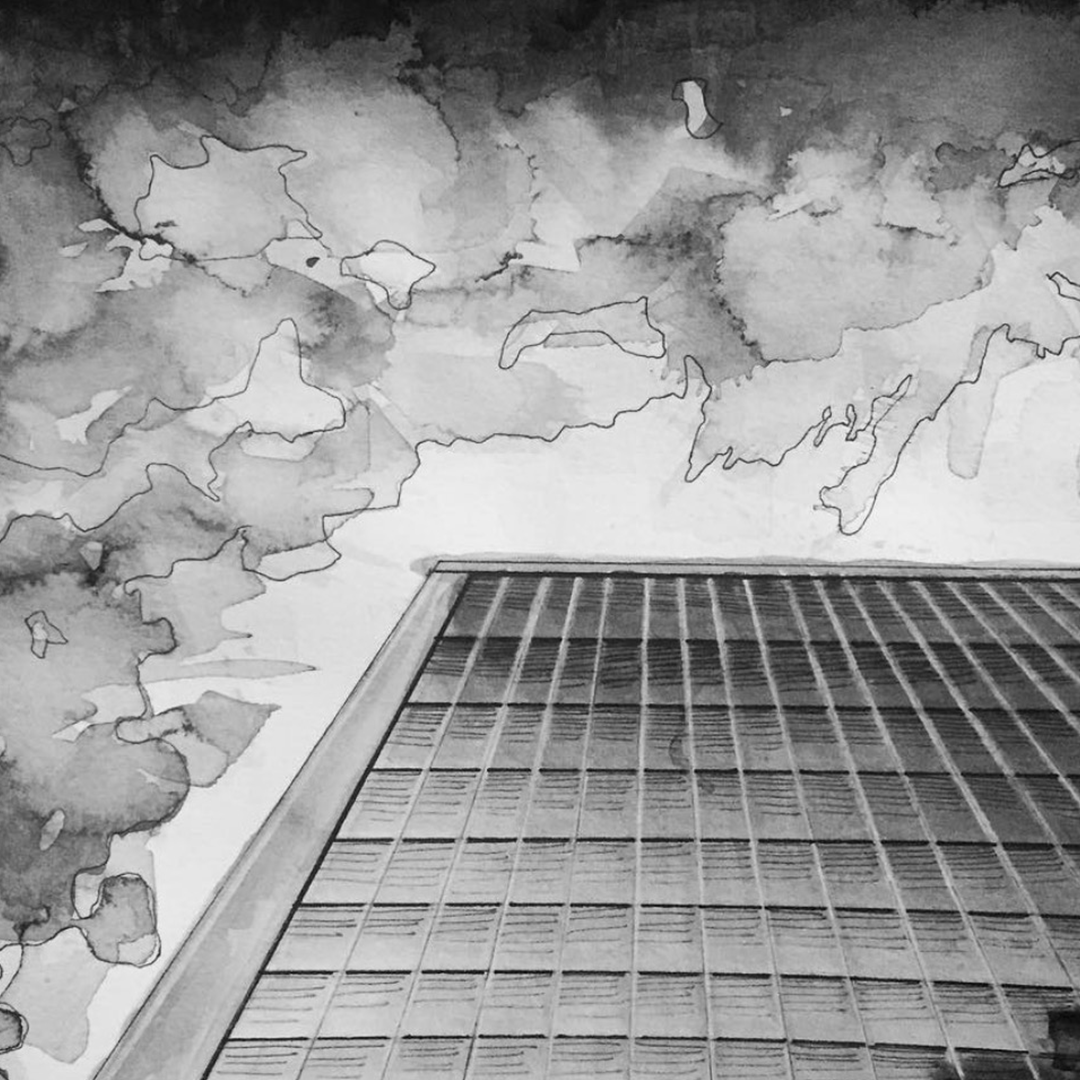
I used to watch Ink Master, and one thing that stuck with me was how artists created depth in black-and-gray tattoos. They were not relying on multiple shades of gray. They were using black ink, dilution, layering, and control.
That helped something click for me.
Depth does not always come from more colors. Sometimes it comes from learning how one material behaves when you push it, thin it, layer it, or let it get a little unruly.
That idea pulled me toward watercolor and acrylic ink. I liked the transparency, the drama, and the way one mark could be both controlled and unpredictable.
That is what style can do. It gives you a way to translate what you notice into marks, materials, colors, and choices that make sense to you.
So, Can You Draw?
Yes.
You may not draw realistically yet. You may not draw the way you wish you could. You may not draw like the person you keep comparing yourself to. You may not be able to make the elephant look like the photo.
Fine. Draw the elephant anyway. Draw it lopsided. Draw it tiny. Draw it furious. Draw it as three circles and a noodle.
You do not need to wait until your hand can perform realism like a trained circus animal. You can start with a line. Then another. Then another. Eventually, the marks begin to tell you something.
Three Studio Exercises to Try
You do not have to know your style before you start. You find it by making things and noticing what keeps showing up.
-
Pick one simple object: a mug, shoe, plant, key, chair, spoon, or candle.
Draw it five different ways:
Realistic
Cartoonish
One continuous line
Only using shapes
Loose and messy
When you’re done, notice which version felt the most natural, interesting, or alive.
-
Start collecting images, colors, textures, objects, and artwork that catch your attention. Use Pinterest, your camera roll, a sketchbook, a folder, or a real wall in your house.
Look for patterns:
What colors keep showing up?
What kinds of lines or shapes are you drawn to?
Do you like things that feel soft, strange, bold, quiet, messy, nostalgic, sacred, playful?
What subjects keep finding you?
This is not about copying. It is about learning what your eye keeps choosing.
-
Pick an object or person in front of you.
Put your pencil on the page. Draw what you see without looking down and without lifting your pencil.
It will look weird. Let it.
When you’re done, look for the parts that feel interesting: a strange line, an unexpected shape, a detail your hand exaggerated.
Sometimes the best marks show up when you stop trying to control the whole page.
